

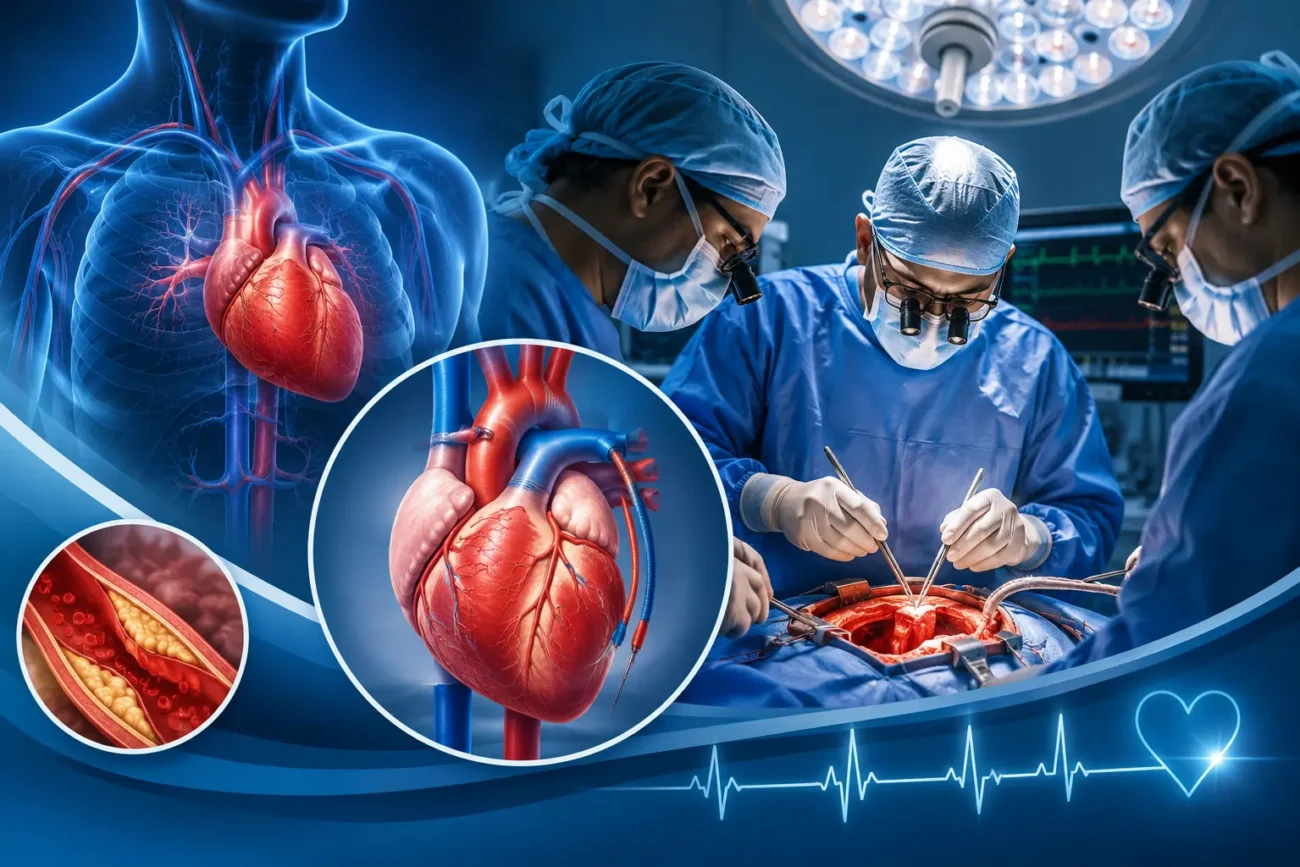
Heart problems can feel frightening, especially when doctors mention the need for a heart bypass surgery. For many people, hearing terms like “blocked arteries,” “open heart surgery,” or “triple bypass surgery” creates fear and uncertainty almost instantly. Still, modern medicine has helped millions of patients recover, regain strength, and return to normal life after surgery.
A heart bypass is one of the most common and successful heart procedures performed worldwide. It’s designed to improve blood flow to the heart when coronary arteries become narrowed or blocked due to coronary artery disease. While the idea of surgery on the heart sounds overwhelming, understanding the process can make patients and families feel more informed and less anxious.
This guide explains everything in simple language from symptoms and causes to recovery, risks, emotional healing, and long-term lifestyle changes after bypass surgery.
What is heart bypass surgery?
Heart bypass surgery is a procedure that improves blood flow to the heart by creating a new path around blocked coronary arteries. Surgeons use healthy blood vessels from another part of the body to bypass narrowed or blocked arteries.
The medical term for this procedure is coronary artery bypass grafting (CABG). During surgery, a heart surgeon takes healthy blood vessels from the chest, arm, or leg and attaches them to the heart arteries. These new pathways allow oxygen-rich blood to reach the heart muscle properly again.
When arteries become blocked with fatty deposits called plaque, the heart struggles to get enough blood supply. Over time, this can cause:
- Chest pain
- Shortness of breath
- Fatigue
- Heart attack
- Weak heart function
A bypass surgery helps restore circulation and reduces strain on the heart.
Why is heart bypass surgery needed?
Heart bypass surgery is needed when coronary arteries become severely narrowed or blocked. The surgery improves blood flow and lowers the risk of heart attack and serious complications.
Doctors may recommend bypass surgery when medications or less invasive treatments no longer work effectively.
Common reasons include:
- Severe coronary artery disease
- Multiple blocked arteries
- Ongoing chest pain (angina)
- Failed stent procedures
- Reduced blood supply to the heart
- Diabetes with artery disease
- Heart attack damage
Sometimes people ignore early symptoms for years. Small warning signs can slowly become dangerous over time.
Symptoms of blocked arteries
Blocked arteries can reduce oxygen supply to the heart and may cause chest discomfort, weakness, and breathing problems. Symptoms often become worse during physical activity or stress.
Some people experience obvious symptoms, while others notice only mild changes in energy levels.
Common symptoms include:
- Chest pain or pressure
- Pain spreading to the arm, jaw, or back
- Shortness of breath
- Dizziness
- Sweating
- Fatigue
- Irregular heartbeat
- Nausea
Women sometimes experience different symptoms such as:
- Extreme tiredness
- Jaw pain
- Upper back pain
- Indigestion-like discomfort
Ignoring these signs may increase the risk of a heart attack.
What is coronary artery bypass grafting (CABG)?
Coronary artery bypass grafting is a surgical procedure that reroutes blood around blocked coronary arteries using healthy blood vessels called grafts.
CABG surgery is considered one of the most effective treatments for severe coronary artery disease.
The healthy grafts usually come from:
- Internal mammary artery in the chest
- Saphenous vein from the leg
- Radial artery from the arm
These grafts create a new route for blood flow, helping the heart receive oxygen more efficiently.
Is bypass surgery open heart surgery?
Yes, bypass surgery is usually a form of open heart surgery. Surgeons open the chest through the breastbone to access the heart.
In many cases, the heart is temporarily stopped during the operation while a bypass machine keeps blood and oxygen circulating through the body.
That machine is often called the heart-lung machine or bypass machine heart support system.
Still, some newer procedures use minimally invasive techniques or “off-pump” surgery where the heart continues beating during the operation.
How does the bypass machine heart system work?
The bypass machine temporarily takes over the function of the heart and lungs during surgery. It keeps oxygen-rich blood moving throughout the body while surgeons operate safely.
This machine allows doctors to work on a still heart with greater precision.
The process usually involves:
- Blood leaving the body through tubes
- Oxygen being added through the machine
- Blood returning to the body
Modern heart-lung machines are highly advanced and carefully monitored throughout surgery.
What happens during heart bypass surgery?
Heart bypass surgery usually takes several hours and involves creating new blood flow pathways around blocked arteries.
Patients are fully asleep under general anesthesia during the procedure.
Typical steps include:
Preparing the patient
Doctors place the patient under anesthesia and monitor heart function carefully.
Opening the chest
The surgeon makes an incision through the breastbone to access the heart.
Taking healthy grafts
Blood vessels are removed from the chest, arm, or leg.
Connecting the grafts
The grafts are attached around blocked coronary arteries.
Restarting the heart
If the heart was stopped, surgeons restart it carefully.
Closing the chest
The breastbone is secured with wires, and the incision is closed.
The operation may take between 3 to 6 hours depending on complexity.
What is triple bypass surgery?
Triple bypass surgery means three blocked coronary arteries are bypassed using three separate grafts. It is performed when multiple arteries have severe blockages.
The number of bypasses depends on how many arteries need improved blood flow.
Types include:
- Single bypass surgery
- Double bypass surgery
- Triple bypass surgery
- Quadruple bypass surgery
A triple bypass surgery is serious, but many patients recover successfully and live for many years afterward.
Heart bypass grafts explained
Heart bypass grafts are healthy blood vessels used to reroute blood around blocked coronary arteries.
Different graft types may be used depending on the patient’s condition and artery health.
Common graft sources
Internal mammary artery
Often lasts the longest and has excellent long-term results.
Saphenous vein
Taken from the leg and commonly used in CABG surgery.
Radial artery
Removed from the arm and used in selected patients.
Doctors choose grafts carefully to maximize long-term success.
Risks and complications of bypass surgery
Heart bypass surgery is generally safe, but like any major operation, it carries some risks. Complications are more likely in older adults or patients with diabetes, kidney disease, or severe heart damage.
Most patients recover without serious issues, especially when surgery is performed by experienced heart surgeons.
Possible risks include:
- Bleeding
- Infection
- Stroke
- Blood clots
- Irregular heartbeat
- Kidney complications
- Memory problems
- Heart attack
- Lung infections
Risk levels vary depending on overall health and the severity of heart disease.
Heart bypass recovery time
Heart bypass recovery usually takes several weeks to a few months. Most patients gradually regain strength and return to normal daily activities over time.
Healing happens in stages, both physically and emotionally.
Typical recovery timeline
First few days
Patients stay in the ICU and hospital for monitoring.
Weeks 1–6
Fatigue, soreness, and limited movement are common.
Weeks 6–12
Energy levels improve slowly, and light exercise becomes easier.
After 3 months
Many patients resume work and regular routines.
Recovery speed depends on:
- Age
- Overall health
- Exercise habits
- Smoking history
- Emotional health
ICU stay after bypass surgery
Most patients spend 1 to 2 days in the intensive care unit after surgery. Doctors monitor breathing, heart rhythm, blood pressure, and oxygen levels closely.
Seeing tubes and machines after surgery can feel alarming for family members, but this is completely normal.
Patients may initially have:
- A breathing tube
- Chest drainage tubes
- IV lines
- Heart monitors
The medical team removes these gradually as recovery improves.
How painful is heart bypass surgery recovery?
Recovery after bypass surgery can be uncomfortable, especially during the first few weeks. Chest soreness, fatigue, and stiffness are common.
Pain is usually managed with medication and improves steadily over time.
Patients often describe:
- Tightness in the chest
- Difficulty sleeping
- Muscle soreness
- Incision discomfort
- Tiredness while walking
Emotional ups and downs are also very common after open heart surgery.
Emotional recovery after open heart surgery
Emotional healing is just as important as physical recovery after heart surgery. Many patients experience fear, sadness, anxiety, or mood changes during recovery.
A major surgery can make people feel emotionally vulnerable.
Some patients worry about:
- Another heart problem happening
- Returning to work
- Physical limitations
- Family responsibilities
- Future health
Support from family, counseling, and cardiac rehabilitation programs can make recovery much easier emotionally.
Diet after heart bypass surgery
A heart-healthy diet supports healing and reduces the risk of future artery blockages. Eating habits play a major role in long-term heart health after CABG surgery.
Doctors often recommend:
Foods to eat
- Fruits
- Vegetables
- Whole grains
- Fish
- Nuts
- Lean proteins
- Olive oil
Foods to limit
- Fried foods
- Processed meat
- Sugary drinks
- Excess salt
- Fast food
- Butter and trans fats
Hydration and portion control also matter during recovery.
Exercise and cardiac rehabilitation
Cardiac rehabilitation helps patients regain strength safely after heart bypass surgery. It combines supervised exercise, education, and emotional support.
Exercise after surgery improves:
- Heart function
- Blood circulation
- Energy levels
- Mood
- Long-term survival
Patients usually begin with:
- Short walks
- Breathing exercises
- Gentle stretching
Over time, activity levels gradually increase.
Heart bypass vs stent
Heart bypass surgery and stents both improve blood flow to the heart, but they work differently. Doctors choose treatment based on artery damage, overall health, and blockage severity.
Heart bypass surgery
Creates new blood flow routes using grafts.
Stents
Small mesh tubes placed inside arteries to keep them open.
Bypass surgery may be better for:
- Multiple blocked arteries
- Severe coronary artery disease
- Diabetes patients
Stents may be better for:
- Smaller blockages
- Emergency heart attack treatment
- Less severe disease
A cardiologist decides the best option after testing.
Can blocked arteries return after bypass surgery?
Yes, arteries can become blocked again if lifestyle changes are not maintained. Even bypass grafts may narrow over time.
Still, many grafts remain functional for 10–20 years or longer.
Reducing future risk involves:
- Quitting smoking
- Exercising regularly
- Managing cholesterol
- Controlling diabetes
- Eating healthy foods
- Taking prescribed medications
Long-term heart care matters just as much as the surgery itself.
Life expectancy after bypass surgery
Many people live long and active lives after bypass surgery. Outcomes often improve significantly when patients adopt healthier habits afterward.
Survival rates depend on:
- Age
- Heart damage severity
- Diabetes status
- Smoking history
- Lifestyle changes
Some patients live decades after surgery with good quality of life.
Regular follow-ups with heart specialists remain essential.
When should you see a heart specialist?
You should see a heart specialist if you experience chest pain, breathing difficulty, fatigue, or symptoms of heart disease. Early treatment may prevent serious complications.
Do not ignore symptoms that repeatedly occur during physical activity or stress.
Seek urgent medical care for:
- Sudden chest pain
- Severe shortness of breath
- Fainting
- Rapid heartbeat
- Signs of a heart attack
Early diagnosis saves lives.
Frequently Asked Questions
Is bypass surgery open heart surgery?
Yes, most bypass surgeries are considered open heart surgery because surgeons open the chest to reach the heart.
In many cases, a heart-lung machine temporarily takes over circulation during the operation while surgeons perform the bypass grafting procedure.
How long does a heart bypass last?
A heart bypass can last many years, and some grafts remain open for 15–20 years or longer.
Long-term success depends heavily on lifestyle habits, medications, smoking status, cholesterol control, and regular medical care.
What are the risks of bypass surgery?
Risks include infection, bleeding, stroke, blood clots, irregular heartbeat, and kidney complications.
Although complications are possible, bypass surgery is commonly performed and has strong success rates when done by experienced heart surgeons.
How painful is heart bypass surgery recovery?
Recovery discomfort is normal after open heart surgery, especially in the chest and incision area.
Pain gradually improves over several weeks. Most patients feel stronger each month as healing continues.
What is the difference between bypass surgery and a stent?
Bypass surgery creates new blood pathways around blocked arteries using grafts, while stents are small tubes inserted into arteries to keep them open.
Doctors choose the treatment based on blockage severity, artery condition, and overall heart health.
How long is hospital stay after bypass surgery?
Most patients stay in the hospital about 5 to 7 days after surgery.
The first part of recovery usually happens in the ICU, followed by monitoring in a regular hospital room before discharge.
Can a person live a normal life after bypass surgery?
Yes, many people return to work, exercise, travel, and enjoy daily activities after recovery.
Healthy habits, regular exercise, medications, and routine heart checkups help patients maintain a good quality of life.
Why would someone need triple bypass surgery?
Triple bypass surgery is needed when three major coronary arteries are severely blocked.
The operation improves blood flow to the heart and helps reduce symptoms like chest pain and breathing difficulty.
What foods should be avoided after bypass surgery?
Patients should limit foods high in saturated fat, salt, sugar, and trans fats after surgery.
Fast food, fried foods, processed meats, sugary beverages, and excessive alcohol may increase heart disease risk over time.
Final Thoughts on Heart Bypass Surgery
Hearing that you may need a heart bypass operation can feel overwhelming at first. Many people worry about pain, recovery, lifestyle changes, and what life will look like afterward. Those feelings are completely understandable.
The good news is that modern heart bypass surgery has helped millions of people regain strength, improve heart function, and enjoy more years with loved ones. Recovery takes patience, support, and healthy daily habits, but many patients return to active and fulfilling lives.
Small lifestyle changes often make a huge difference after surgery. Regular medical checkups, balanced nutrition, exercise, stress management, and emotional support all play a powerful role in long-term heart health.
Disclaimer: This article is for informational purposes only and does not replace professional medical advice, diagnosis, or treatment. Always consult with a qualified healthcare provider regarding a medical condition.