

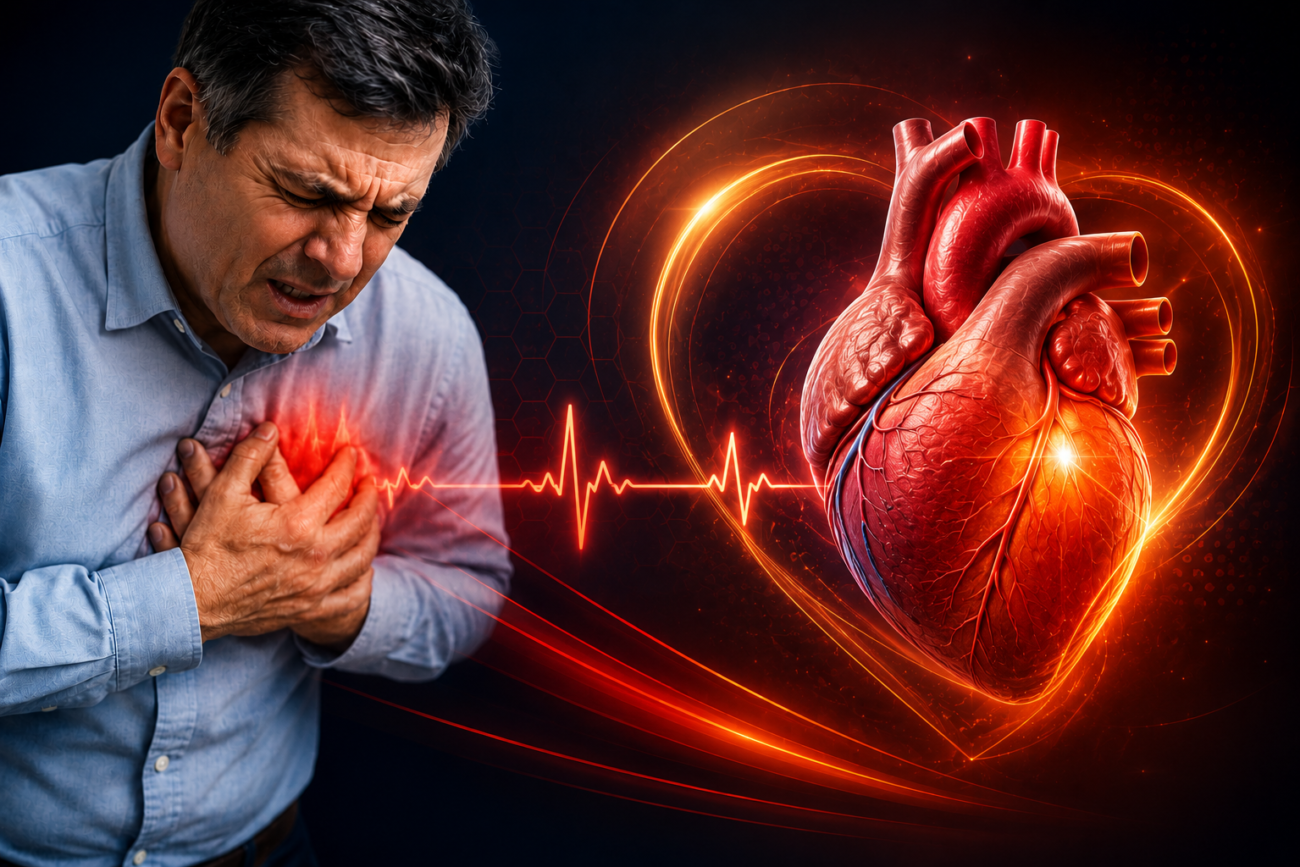
A Quiet Warning Many People Miss
It started with a little pressure in the chest.
Not sharp pain. Not collapse-to-the-floor drama like people often see in movies. Just a strange discomfort after dinner. A man in his early 50s thought it was stress from work. He ignored it for two days. By the third morning, he woke up sweating, dizzy, and unable to catch his breath.
Stories like this happen every day.
A heart attack can begin quietly. Some people feel crushing chest pain, while others notice fatigue, nausea, jaw pain, or unusual shortness of breath. Women, in particular, may experience symptoms that don’t look “typical” at all.
That’s why understanding heart attack symptoms matters so much. Recognizing the early warning signs could save a life maybe even your own.
What Is a Heart Attack?
A heart attack happens when blood flow to part of the heart becomes blocked, usually because of fatty deposits and plaque buildup inside the arteries.
Without enough oxygen-rich blood, heart muscle tissue starts getting damaged.
In simple terms, the heart is starving for oxygen.
The medical term for a heart attack is myocardial infarction, but most people simply call it a heart attack.
The blockage can happen suddenly or develop over time. Sometimes symptoms appear days before the actual emergency. In other cases, it strikes without much warning.
The faster treatment begins, the better the chances of reducing damage to the heart.
Common Heart Attack Symptoms
Many people expect dramatic chest pain during a heart attack. While chest discomfort is common, symptoms can vary from person to person.
Here are the most recognized signs of a heart attack:
Chest Pain or Pressure
This is the symptom most people associate with a heart attack.
People often describe it as:
- Tightness
- Pressure
- Burning
- Squeezing
- Fullness in the chest
The discomfort may last several minutes or come and go.
Shortness of Breath
Feeling unable to breathe properly can happen before or during a heart attack.
Some people notice breathlessness while walking, climbing stairs, or even resting.
Pain Spreading to Other Areas
Pain may travel to:
- Left arm
- Both arms
- Shoulder
- Neck
- Jaw
- Back
Sometimes jaw or arm pain appears without strong chest pain.
Sweating
Cold sweats without physical exertion can be a major warning sign.
People often describe sudden clammy skin and feeling unusually hot or anxious.
Nausea or Stomach Discomfort
A heart attack may feel surprisingly similar to indigestion or food poisoning.
Symptoms may include:
- Upset stomach
- Vomiting
- Heartburn-like discomfort
- Bloating sensation
Dizziness or Lightheadedness
Feeling faint, weak, or suddenly unstable can happen when the heart struggles to pump blood effectively.
Heart Attack Symptoms in Women
Heart attack symptoms in women are sometimes different from what many people expect.
Women may experience chest pain, but they are also more likely to notice subtle or unusual symptoms that are easier to dismiss.
Unusual Fatigue
One of the most common signs of heart attack in women is extreme tiredness.
Not normal tiredness after a busy day the kind of exhaustion that feels overwhelming for no clear reason.
Some women report feeling drained for days or weeks before a heart attack.
Jaw, Neck, or Back Pain
Pain may appear in areas unrelated to the chest.
A woman may think she slept wrong or pulled a muscle, when in reality the heart is under stress.
Mild Chest Pressure
Instead of severe chest pain, some women feel:
- Tightness
- Burning
- Pressure
- Aching
This milder discomfort can delay emergency treatment because it doesn’t feel “serious enough.”
Nausea and Dizziness
Women are more likely to experience:
- Nausea
- Vomiting
- Lightheadedness
- Sweating
These symptoms are sometimes mistaken for anxiety, flu, or digestive problems.
Sleep Disturbances
Difficulty sleeping or waking up feeling anxious and uncomfortable may occur before a heart attack.
Some women report restlessness and unexplained nighttime discomfort days beforehand.
Signs of a Heart Attack That People Often Ignore
Not every heart attack announces itself loudly.
In fact, many people ignore symptoms because they seem too mild or unrelated.
Persistent Fatigue
A person may blame work stress, lack of sleep, or aging.
But unusual exhaustion combined with shortness of breath should never be ignored.
Indigestion-Like Symptoms
Heart attacks can mimic acid reflux or heartburn.
If stomach discomfort appears alongside chest pressure, sweating, or arm pain, it’s important to seek medical attention.
Mild Chest Discomfort
Some heart attacks feel more like pressure than pain.
People often delay treatment because they expect unbearable pain.
Silent Heart Attacks
A silent heart attack causes little or no obvious symptoms.
Some people only discover it later during medical testing.
Silent heart attacks are more common in older adults and people with diabetes.
Major Causes and Risk Factors
Heart disease usually develops over time. Lifestyle habits, genetics, and medical conditions can all increase the risk.
Smoking
Smoking damages blood vessels and reduces oxygen in the blood.
Even occasional smoking increases cardiovascular risk.
High Cholesterol
Too much “bad” cholesterol can build plaque inside arteries, narrowing blood flow to the heart.
High Blood Pressure
When blood pressure stays high for years, the heart works harder than normal.
This strains arteries and increases the risk of heart attack and stroke.
Diabetes
People with diabetes have a higher risk of heart disease because high blood sugar damages blood vessels over time.
Obesity
Excess body weight can contribute to:
- High cholesterol
- High blood pressure
- Diabetes
- Inflammation
All of these affect heart health.
Lack of Exercise
A sedentary lifestyle weakens cardiovascular fitness and increases weight-related risks.
Even regular walking can improve heart health.
Chronic Stress
Long-term stress may affect blood pressure, sleep, eating habits, and inflammation levels.
Stress alone may not directly cause a heart attack, but it can contribute to unhealthy patterns.
Poor Diet
Frequent intake of heavily processed foods, excess sugar, trans fats, and high sodium meals can negatively affect heart health over time.
What To Do During a Heart Attack
Quick action matters.
If you think someone may be having a heart attack, do not wait to “see if it passes.”
Step 1: Call Emergency Services Immediately
In the United States, call 911.
Emergency responders can begin treatment on the way to the hospital.
Driving yourself may delay care or become dangerous if symptoms worsen.
Step 2: Sit Down and Stay Calm
Try to stay seated and avoid physical activity.
Panic can place extra strain on the heart.
Step 3: Chew Aspirin (If Advised)
Emergency professionals may recommend chewing aspirin because it can help reduce blood clotting.
However, aspirin isn’t safe for everyone, especially those with allergies or bleeding conditions.
Step 4: Unlock the Door or Alert Others
If alone, contact a family member or neighbor if possible.
Step 5: Begin CPR if Necessary
If a person becomes unconscious and stops breathing, CPR may help maintain blood flow until emergency responders arrive.
Prevention Tips for Better Heart Health
The good news? Many heart attacks are preventable through healthier lifestyle choices.
Small habits often make a bigger difference than people realize.
Eat a Heart-Healthy Diet
Focus on:
- Fruits
- Vegetables
- Whole grains
- Lean proteins
- Healthy fats
Try reducing heavily processed foods and sugary drinks.
Exercise Regularly
You don’t need extreme workouts.
Even 30 minutes of walking most days can support cardiovascular health.
Quit Smoking
Quitting smoking is one of the best things a person can do for their heart.
Benefits often begin within weeks.
Manage Stress
Chronic stress affects both mind and body.
Helpful habits include:
- Deep breathing
- Better sleep
- Physical activity
- Spending time outdoors
- Talking to supportive people
Prioritize Sleep
Poor sleep is linked to high blood pressure, obesity, and heart disease.
Adults generally benefit from 7–9 hours of sleep per night.
Get Regular Health Checkups
Monitoring:
- Blood pressure
- Cholesterol
- Blood sugar
can help detect problems early.
Frequently Asked Questions
Are heart attack symptoms different in women?
Yes, they can be.
Heart attack symptoms in women may include unusual fatigue, nausea, back pain, jaw discomfort, sleep disturbances, and mild chest pressure instead of intense chest pain.
How long can symptoms last before a heart attack?
Symptoms may appear suddenly or develop gradually over hours, days, or even weeks.
Recurring chest discomfort or unexplained fatigue should never be ignored.
What age are heart attacks most common?
Risk generally increases with age, especially after 45 in men and after menopause in women.
However, younger adults can also experience heart attacks, particularly when risk factors are present.
Can stress cause a heart attack?
Stress alone usually isn’t the only cause, but chronic stress may increase blood pressure and unhealthy habits that contribute to heart disease.
Is arm pain always present during a heart attack?
No.
Some people experience chest pain only, while others may feel pain in the jaw, neck, back, or shoulders.
Symptoms vary widely between individuals.
When Should You Seek Emergency Help?
Seek immediate medical attention if you experience:
- Chest pain or pressure
- Sudden shortness of breath
- Pain spreading to the arm or jaw
- Severe sweating
- Fainting
- Sudden dizziness
- Unexplained nausea with chest discomfort
It’s always safer to get checked early than to wait too long.
Final Thoughts
A heart attack doesn’t always look the way people expect.
Sometimes it begins with subtle fatigue, mild pressure, or symptoms mistaken for stress or indigestion. Women, especially, may experience warning signs that feel unrelated to the heart at first.
Paying attention to your body matters.
Healthy habits, regular checkups, exercise, better sleep, and avoiding smoking can significantly lower the risk of heart disease over time.
Most importantly, never ignore persistent or unusual symptoms. Fast medical treatment can save heart muscle and save lives.
This article is for informational purposes only and should not replace professional medical advice, diagnosis, or emergency care. If you believe you or someone else may be experiencing a heart attack, seek immediate medical attention.