

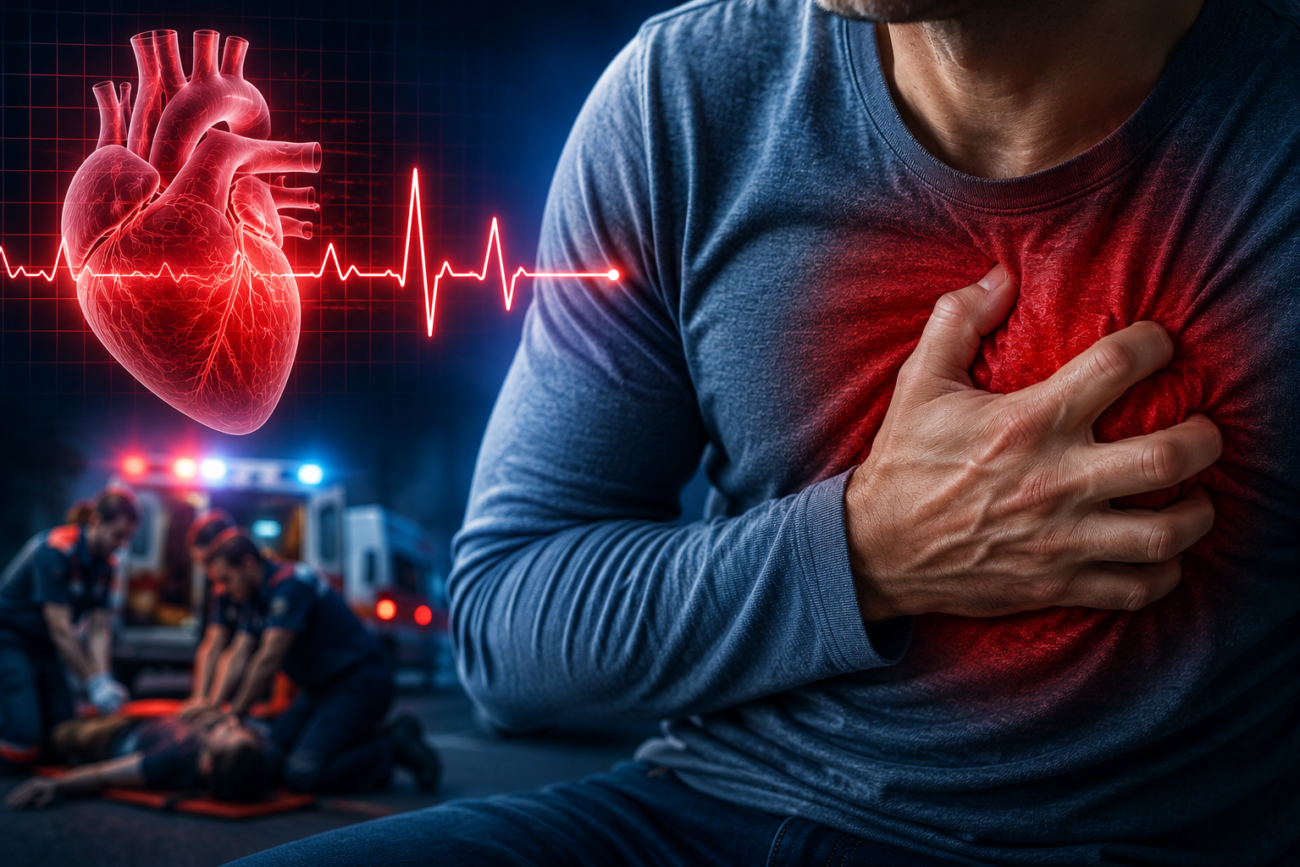
Recognizing cardiac arrest symptoms early can help save a life during a heart emergency.
Imagine someone finishing a normal workout, laughing with friends, then suddenly feeling dizzy. They brush it off as exhaustion. A few moments later, they collapse without warning.
Sadly, stories like this happen every day.
Cardiac arrest is one of the most serious medical emergencies in the world. It can affect older adults, younger people, athletes, and even individuals who never realized they had a heart condition. Sometimes there are warning signs. Other times, it happens fast and unexpectedly.
That’s why understanding cardiac arrest symptoms and knowing what to do during those first critical minutes can literally save a life.
In this guide, you’ll learn the signs of cardiac arrest, causes, risk factors, emergency response steps, prevention tips, and how cardiac arrest differs from a heart attack.
What Is Cardiac Arrest?
Cardiac arrest happens when the heart suddenly stops beating effectively. When this occurs, blood can no longer flow properly to the brain, lungs, and other organs.
Without immediate treatment, a person can lose consciousness within seconds and stop breathing normally.
Sudden cardiac arrest is considered a life-threatening emergency because survival depends heavily on how quickly CPR and defibrillation begin.
How Is Cardiac Arrest Different From a Heart Attack?
People often confuse cardiac arrest with a heart attack, but they are not the same thing.
Heart Attack
A heart attack happens when blood flow to part of the heart becomes blocked.
Cardiac Arrest
Cardiac arrest happens when the heart’s electrical system malfunctions and the heart suddenly stops pumping blood properly.
A heart attack can sometimes trigger cardiac arrest, but cardiac arrest may also occur without a prior heart attack.
Common Cardiac Arrest Symptoms
Cardiac arrest symptoms may appear suddenly or develop hours, days, or even weeks beforehand.
Some people experience obvious warning signs. Others notice only subtle changes they dismiss as stress, fatigue, or overexertion.
Most Common Signs of Cardiac Arrest
Sudden Collapse
This is often the first visible sign of sudden cardiac arrest.
Loss of Consciousness
The person may become unresponsive within seconds.
No Pulse
The heart stops pumping blood effectively.
No Breathing or Abnormal Breathing
Breathing may stop completely or sound like gasping.
Chest Pain or Chest Discomfort
Some people feel pressure, heaviness, or tightness before collapsing.
Shortness of Breath
Breathing may become difficult even during light activity.
Dizziness or Lightheadedness
This symptom is commonly ignored or mistaken for exhaustion.
Irregular Heartbeat
Some people feel fluttering, racing, or skipped heartbeats beforehand.
Extreme Weakness
Sudden exhaustion without explanation can sometimes signal heart strain.
Sudden Confusion
Reduced blood flow to the brain may lead to confusion or disorientation.
Cardiac Arrest Symptoms in Women
Women may experience more subtle symptoms before cardiac arrest, which can make early recognition harder.
Instead of severe chest pain, many women describe pressure, fatigue, or unusual weakness.
Common Symptoms in Women
- Unusual tiredness lasting days or weeks
- Nausea or upset stomach
- Dizziness or fainting
- Anxiety-like feelings
- Chest pressure rather than sharp pain
- Sleep disturbances
- Shortness of breath
- Pain in the back, neck, jaw, or shoulders
A woman may think she’s simply stressed, overworked, or lacking sleep when the body is actually signaling a serious heart issue.
This is one reason heart emergencies in women are sometimes diagnosed later than they should be.
Warning Signs People Often Ignore
Not everyone experiences dramatic symptoms before cardiac arrest.
In many real-life cases, people later realize they ignored warning signs because they didn’t seem serious at the time.
Someone may stop midway through climbing stairs because they suddenly feel weak. Another person may experience unexplained sweating during mild activity. Others blame dizziness on dehydration or stress.
Overlooked Cardiac Arrest Warning Signs
Mild Chest Tightness
A feeling of heaviness or squeezing that comes and goes.
Unusual Fatigue
Feeling exhausted even after adequate rest.
Rapid Heartbeat
A racing or pounding heart without clear reason.
Lightheadedness
Feeling faint or unsteady unexpectedly.
Poor Exercise Tolerance
Getting tired much faster during normal activity.
Unexplained Sweating
Cold sweats without physical exertion or heat.
Stress-Like Symptoms
Anxiety, chest pressure, and shortness of breath can mimic stress reactions.
These symptoms don’t always mean cardiac arrest is coming, but persistent or sudden heart-related symptoms should never be ignored.
Major Causes of Cardiac Arrest
Several heart and health conditions can increase the risk of sudden cardiac arrest.
Coronary Artery Disease
This is one of the leading causes. Narrowed arteries reduce blood flow to the heart.
Previous Heart Attack
A damaged heart muscle may increase the risk of dangerous heart rhythms.
Abnormal Heart Rhythms
Electrical problems in the heart can cause life-threatening rhythm disturbances.
Heart Failure
A weakened heart may struggle to pump blood effectively.
Congenital Heart Conditions
Some people are born with structural or electrical heart abnormalities.
Drug Misuse
Certain drugs can trigger dangerous heart rhythm problems.
Severe Physical Stress
Extreme exertion or dehydration may increase risk in vulnerable individuals.
Cardiac Arrest Risk Factors
Some risk factors develop over time, while others may be genetic.
Common Risk Factors
- Smoking
- Obesity
- Diabetes
- High blood pressure
- High cholesterol
- Family history of heart disease
- Lack of exercise
- Chronic stress
- Aging
- Poor diet
- Excessive alcohol use
- Sleep disorders
- Existing heart disease
Even younger people can experience sudden cardiac arrest, especially if underlying heart rhythm disorders go unnoticed.
Can Cardiac Arrest Happen Without Warning?
Yes.
Some people experience sudden cardiac arrest without any noticeable symptoms beforehand.
This can happen during exercise, sleep, work, or everyday activities. In athletes, rare inherited heart conditions may sometimes be responsible.
That’s why regular health checkups and heart screenings can be valuable, particularly for individuals with family histories of heart disease or unexplained fainting episodes.
What To Do During Cardiac Arrest
Fast action saves lives.
When cardiac arrest happens, every minute matters.
Step 1: Call Emergency Services Immediately
Call emergency medical services right away.
Do not wait to see if symptoms improve.
Step 2: Start CPR
If the person is unconscious and not breathing normally:
- Place your hands in the center of the chest
- Push hard and fast
- Continue chest compressions until help arrives
Even basic CPR can help maintain blood flow to the brain and heart.
Step 3: Use an AED if Available
An Automated External Defibrillator (AED) can restart a dangerous heart rhythm.
AEDs are often found in:
- Airports
- Gyms
- Schools
- Shopping centers
- Offices
Most AEDs provide voice instructions, making them usable even for non-medical individuals.
Step 4: Stay Calm and Act Quickly
Panic wastes valuable time.
Quick action dramatically improves survival chances.
Emergency Symptoms That Require Immediate Action
Seek emergency help immediately if someone experiences:
- Sudden collapse
- No pulse
- No breathing
- Severe chest pain
- Unconsciousness
- Sudden fainting
- Extreme shortness of breath
- Blue or pale skin
Never assume these symptoms will “pass on their own.”
Why CPR Awareness Matters
Many cardiac arrests happen outside hospitals, often at home.
That means family members, coworkers, friends, or bystanders may become the first responders.
Learning CPR can make a major difference before emergency teams arrive.
People often remember moments when someone nearby froze in panic because they didn’t know what to do. Even basic CPR training can provide confidence during a real emergency.
Prevention Tips for Cardiac Arrest
While not every case is preventable, healthy lifestyle habits can reduce risk significantly.
Eat a Heart-Healthy Diet
Focus on:
- Fruits
- Vegetables
- Whole grains
- Lean proteins
- Healthy fats
Limit excessive salt, processed foods, and sugary drinks.
Exercise Regularly
Regular movement helps support heart health and circulation.
Even walking consistently can help.
Quit Smoking
Smoking damages blood vessels and increases heart disease risk.
Manage Blood Pressure
High blood pressure can strain the heart over time.
Regular monitoring matters.
Control Diabetes and Cholesterol
Uncontrolled diabetes and high cholesterol increase cardiovascular risk.
Maintain a Healthy Weight
Excess weight can contribute to multiple heart-related conditions.
Reduce Stress
Chronic stress may negatively affect heart health.
Relaxation techniques, sleep, and emotional support can help.
Schedule Regular Checkups
Routine medical visits may detect heart rhythm problems early.
Don’t Ignore Symptoms
Chest discomfort, fainting, dizziness, or unexplained fatigue deserve medical attention.
Cardiac Arrest in Younger People
Many people assume cardiac arrest only affects older adults.
That’s not always true.
Young athletes and otherwise healthy individuals may have hidden heart conditions that increase risk.
Symptoms like fainting during exercise, rapid heartbeat, or unexplained chest pain should always be evaluated by a healthcare professional.
Frequently Asked Questions
Can cardiac arrest happen without warning?
Yes. Some people experience sudden cardiac arrest with little or no prior symptoms.
Is cardiac arrest the same as a heart attack?
No. A heart attack involves blocked blood flow to the heart, while cardiac arrest occurs when the heart suddenly stops pumping effectively.
Can young people have cardiac arrest?
Yes. Although risk increases with age, younger individuals can also experience cardiac arrest due to inherited heart conditions, abnormal heart rhythms, or other medical issues.
What should you do if someone collapses suddenly?
Call emergency services immediately, begin CPR if possible, and use an AED if one is available.
Can stress increase cardiac arrest risk?
Chronic stress may contribute to high blood pressure, unhealthy habits, and heart strain, which can increase cardiovascular risk over time.
Is fainting a warning sign of cardiac arrest?
Sometimes. Sudden fainting or unexplained loss of consciousness should never be ignored, especially if accompanied by chest pain or irregular heartbeat.
Honest Final Thoughts
Cardiac arrest can happen suddenly and without much warning, which is exactly why awareness matters so much.
Many people ignore symptoms because they seem small at first a little dizziness, unusual fatigue, chest pressure, or shortness of breath. Unfortunately, the body sometimes whispers before it screams.
Learning CPR, recognizing cardiac arrest warning signs, and taking heart symptoms seriously could help save someone’s life someday possibly even your own.
If you or someone around you experiences chest pain, fainting, breathing difficulty, or signs of sudden cardiac arrest, seek emergency medical help immediately.
And remember: this article is for informational purposes only and should never replace professional medical advice, diagnosis, or treatment.